How to Build an MVP for a Startup: Complete Guide for Founders in 2026
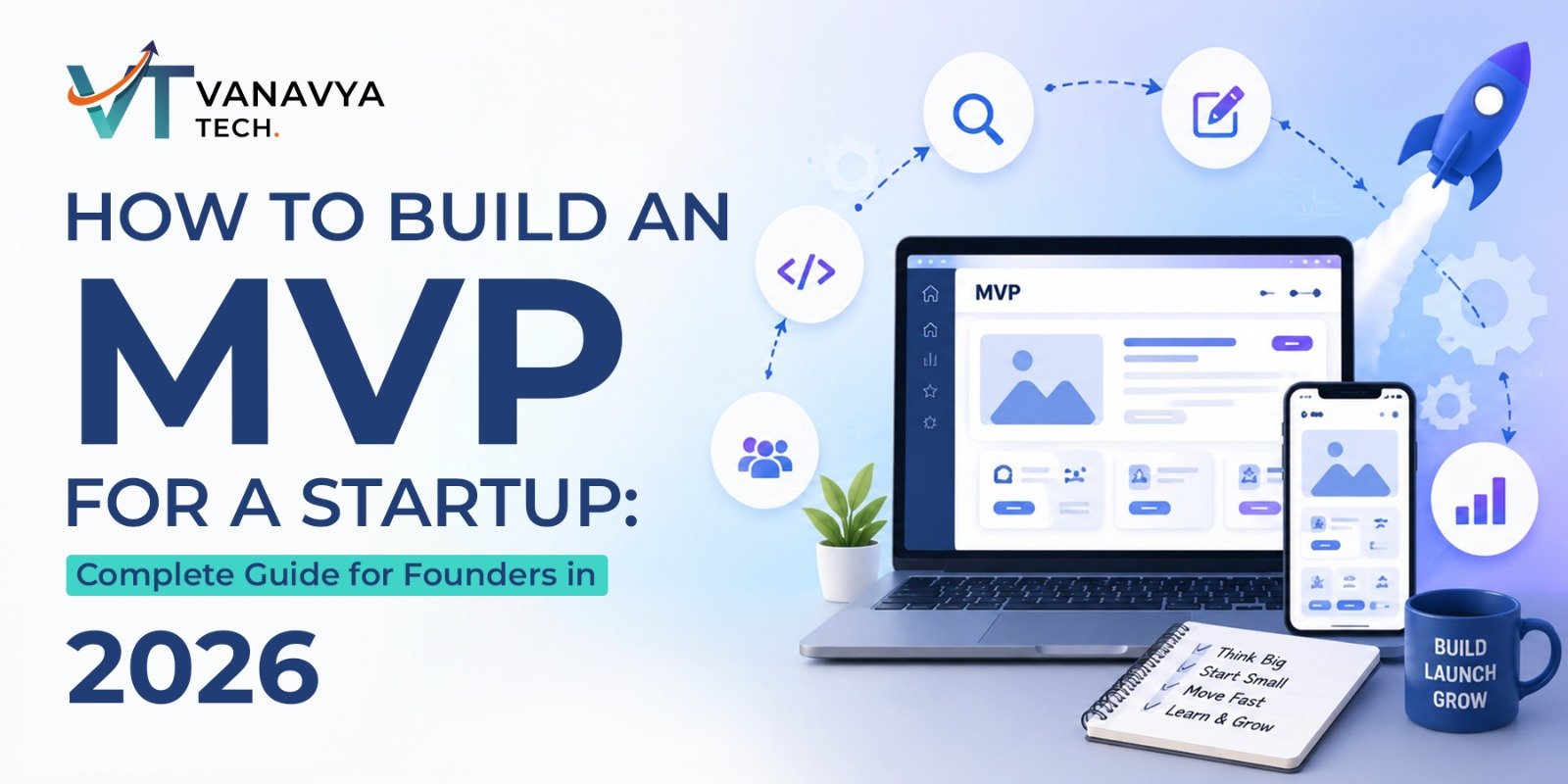
Building a startup is challenging, especially when resources, time, and budgets are limited. Many founders make the mistake of investing heavily in a full-scale product before validating market demand. This often leads to wasted development costs and failed product launches. A Minimum Viable Product (MVP) helps startups test their ideas with real users, gather feedback, and refine their offerings before making larger investments. Some of the world's most successful startups, including Airbnb, Dropbox, Uber, and Instagram, began with simple MVPs that focused on validating a single core idea. Rather than spending years building complex products, these companies launched quickly, learned from users, and improved their offerings over time. This guide explains how to build an MVP for a startup, validate your concept, estimate costs, avoid common mistakes, and maximise your chances of long-term success.
What Is an MVP?
A Minimum Viable Product (MVP) is the simplest version of a product that includes only the essential features required to solve a core customer problem. The primary purpose of an MVP is not to create a perfect product but to validate business assumptions and gather feedback from real users. An MVP enables startups to test demand, identify user preferences, and determine whether a product has the potential to succeed before committing significant resources to development.
Why Startups Need an MVP
Startups operate in environments filled with uncertainty. Founders often have assumptions about customer needs, pricing models, and product functionality that may not align with reality. An MVP helps validate these assumptions quickly and cost-effectively. By launching an MVP, startups can reduce development risks, conserve resources, and make data-driven decisions based on actual customer behaviour rather than speculation.
MVP vs Full Product
While an MVP focuses on solving one specific problem with a limited feature set, a full product offers a comprehensive experience with advanced functionality, integrations, and scalability features. An MVP is designed for learning and validation, while a full product is built for growth, retention, and market expansion. Startups should only move beyond the MVP stage after achieving sufficient validation and product-market fit.
Benefits of Building an MVP
An MVP allows startups to enter the market faster, gather valuable customer feedback, validate investor interest, and reduce development costs. It creates opportunities to learn from users early and refine the product before making larger investments.
Why MVP Development Is Critical for Startup Success
Validate Market Demand
One of the biggest reasons startups fail is a lack of market demand. An MVP helps founders determine whether customers are genuinely interested in their solution and willing to use or pay for it. Instead of relying on assumptions, startups gain direct insights from real-world interactions and customer behaviour.
Minimize Financial Risk
Building a full-scale product without validation can result in significant financial losses. MVP development reduces risk by limiting initial investment and focusing only on essential functionality. This approach enables startups to preserve capital while evaluating whether their idea deserves further development.
Attract Investors
Investors often look for evidence that a startup's idea has market potential. An MVP demonstrates traction, user engagement, and demand validation, making it easier to attract funding and strategic partnerships. Startups with validated MVPs are often viewed as lower-risk investment opportunities.
Learn from Real Users
Customer feedback is one of the most valuable assets for a startup. MVPs provide direct access to user opinions, preferences, pain points, and usage patterns.
These insights help founders improve product-market fit and prioritize future development efforts.
Real Example
Dropbox is one of the most famous examples of MVP validation. Instead of building a complete file-sharing platform immediately, the company launched a simple explainer video demonstrating how the product would work. The video generated significant interest and thousands of sign-ups, proving demand before extensive development began.
Step 1: Identify the Problem You Are Solving
Define the Core Problem
Every successful startup solves a meaningful problem. Before developing an MVP, founders must clearly define the customer pain point they aim to address. Understanding existing alternatives, unmet needs, and market gaps helps ensure the product delivers real value rather than becoming another solution in search of a problem.
Understand Your Target Audience
An MVP should be designed for a specific audience rather than attempting to serve everyone. Startups should develop customer personas that include demographics, behavioral patterns, motivations, challenges, and purchasing decisions. A deeper understanding of the target audience improves product design and marketing effectiveness.
Conduct Market Research
Market research helps validate assumptions and identify opportunities. Founders should analyse competitors, study industry trends, and conduct customer interviews to better understand market conditions. These insights often reveal opportunities for differentiation and innovation.
Expert Insight
The most successful MVPs focus on solving one critical problem exceptionally well rather than attempting to address multiple problems simultaneously.
Step 2: Define Your Value Proposition
What Makes Your Solution Unique?
A strong value proposition explains why customers should choose your product over existing alternatives. Competitive advantages may come from innovation, cost savings, convenience, speed, accessibility, or an improved user experience. Clearly articulating this value is essential for attracting users and investors.
Create a Clear Value Statement
Every startup should be able to answer three fundamental questions. Who is the target user? What problem does the product solve? Why is the solution better than existing alternatives? A concise and compelling value proposition serves as the foundation for product development and marketing efforts.
Validate Assumptions Early
Founders should validate assumptions before investing heavily in development.
Surveys, interviews, landing pages, and prototype demonstrations can provide valuable insights into customer interest and willingness to engage with the product.
Step 3: Prioritize MVP Features
Identify Must-Have Features
A common mistake among startups is including too many features in an MVP.
The focus should remain on functionality required to solve the primary customer problem. Additional features can be introduced after validation and user feedback.
Use the MoSCoW Framework
| Priority Level | Description |
|---|---|
| Must Have | Essential features required for launch |
| Should Have | Important features but not critical |
| Could Have | Nice-to-have enhancements |
| Won't Have | Features reserved for future releases |
The MoSCoW framework helps founders prioritize functionality and avoid unnecessary development costs.
Avoid Feature Creep
Feature creep occurs when startups continuously add new functionality during development. This often increases costs, delays launch timelines, and distracts teams from validating the core concept. Successful MVPs remain focused on solving one problem effectively.
Real Example
Uber's first MVP was extremely simple. It focused solely on connecting riders with drivers and processing payments. Features such as ride-sharing, loyalty programs, and route optimization were introduced later after demand had been validated.
Step 4: Create User Flows and Wireframes
Map the User Journey
Before development begins, founders should visualize how users will interact with the product. This includes onboarding, registration, product usage, and conversion actions. User journey mapping helps identify friction points and improve usability.
Design Low-Fidelity Wireframes
Wireframes provide a visual representation of product structure and navigation.
By creating wireframes before development, startups can validate ideas, align stakeholders, and reduce costly design changes later in the process.
Validate Designs Before Development
Testing wireframes with potential users provides valuable feedback regarding usability and functionality. Addressing design issues early helps improve user experience while reducing development costs. Popular design tools include Figma, Adobe XD, and Balsamiq, which allow teams to create and iterate on product concepts quickly.
Step 5: Choose the Right Technology Stack
Factors to Consider
Selecting the right technology stack influences development speed, scalability, performance, and long-term maintenance costs. A strong foundation in Full Stack Web Development ensures that MVPs can scale efficiently as user adoption grows. Founders should consider project complexity, expected user growth, budget constraints, and future expansion requirements when making technology decisions.
Popular MVP Technology Stacks
Many startups use React, Node.js, and PostgreSQL for web applications because of their flexibility and strong community support. For mobile applications, Flutter and React Native are popular choices due to their ability to support multiple platforms with a single codebase. SaaS startups often leverage Next.js, Python, and AWS to build scalable cloud-based solutions.
Expert Insight
Choosing technologies that support future scalability can significantly reduce redevelopment costs and technical debt as the startup grows.
Step 6: Develop and Launch the MVP
Agile Development Approach
Agile development enables startups to build products in small, manageable iterations. This approach supports continuous feedback, faster improvements, and greater adaptability as user requirements evolve.
Build Core Functionality First
The primary objective is solving the customer's core problem. Development efforts should focus exclusively on essential functionality required for validation. Many startups partner with experienced teams specialising in AI Product Development to accelerate MVP delivery and reduce development risks. Secondary features can be introduced after gaining market traction.
Test Before Launch
Quality assurance is critical for ensuring a positive user experience. Functional testing verifies product behaviour, performance testing evaluates speed and reliability, and security testing identifies vulnerabilities before launch.
Soft Launch Strategy
Many successful startups begin with a soft launch to a limited audience.
This approach allows teams to gather feedback, identify issues, and make improvements before a broader public release.
MVP Development Cost for Startups
Factors Affecting Cost
Several variables influence MVP development costs, including product complexity, feature requirements, integrations, technology choices, team structure, and security considerations. More advanced functionality generally requires larger investments and longer development timelines.
Estimated MVP Development Costs
| MVP Type | Estimated Cost |
|---|---|
| Basic MVP | ₹2–8 Lakhs |
| SaaS MVP | ₹8–25 Lakhs |
| Marketplace MVP | ₹10–30 Lakhs |
| AI-Based MVP | ₹15–50+ Lakhs |
These estimates vary depending on project requirements, development location, and technology choices.
How to Reduce MVP Costs
Startups can reduce costs by focusing on core functionality, utilizing pre-built components, leveraging cloud services, and adopting Agile development practices that minimize waste and accelerate validation.
Common MVP Development Mistakes
Building Too Many Features: Adding unnecessary functionality increases complexity and delays validation efforts.
Ignoring Customer Feedback: Customer feedback provides the foundation for product improvement. Ignoring user insights often results in poor product-market fit.
Skipping Market Validation: Building without validating demand significantly increases the risk of failure.
Choosing the Wrong Technology: Technology decisions can impact scalability, maintenance costs, and future development flexibility.
Delaying Launch: Waiting for perfection often prevents startups from learning what customers truly want.
Underestimating Maintenance Costs: Post-launch maintenance, security updates, and infrastructure costs should be included in long-term planning.
Expert Insight: The goal of an MVP is learning, not perfection. Launching early and gathering feedback is often more valuable than spending months perfecting features that customers may never use.
Real Startup MVP Success Stories
Airbnb: Airbnb began with a simple website that allowed founders to rent out air mattresses in their apartment. This basic concept validated demand for short-term accommodations.
Dropbox Dropbox used a demonstration video to test interest before building a complete product, saving significant development resources.
Uber Uber focused initially on one city and one use case, allowing the company to validate demand before expanding.
Instagram: Instagram launched with only its core photo-sharing functionality and gradually introduced additional features based on user feedback.
How to Measure MVP Success
Key Metrics
Successful MVP evaluation requires tracking user acquisition, retention rates, customer feedback, conversion rates, and engagement levels.
These metrics help founders understand whether users find value in the product.
Product-Market Fit Indicators
Repeat usage, customer referrals, organic growth, and increasing revenue often indicate strong product-market fit.
These signals suggest that the startup is solving a meaningful problem for its target audience.
When to Move Beyond the MVP
Startups should consider scaling once they consistently attract users, achieve strong retention, receive positive feedback, and demonstrate sustainable growth potential.
At this stage, additional features, infrastructure improvements, and expansion strategies can be implemented with greater confidence.
Conclusion
Building an MVP is one of the smartest ways for startups to validate ideas, reduce risk, and achieve product-market fit before investing heavily in full-scale development. By focusing on solving a single customer problem, prioritising essential features, and gathering feedback from real users, founders can make informed decisions and improve their chances of long-term success. Whether you are launching a SaaS platform, marketplace, mobile application, or AI-powered solution, a well-executed MVP provides the foundation for sustainable growth, investor confidence, and future innovation. Start small, learn quickly, and scale strategically based on real customer insights.
Vanavya Tech helps startups transform ideas into market-ready MVPs through rapid development, product strategy, UI/UX design, and scalable technology solutions. Contact our team today to discuss your startup vision and accelerate your journey from idea to launch.
Join our Newsletter
Get the latest tech insights delivered straight to your inbox.